
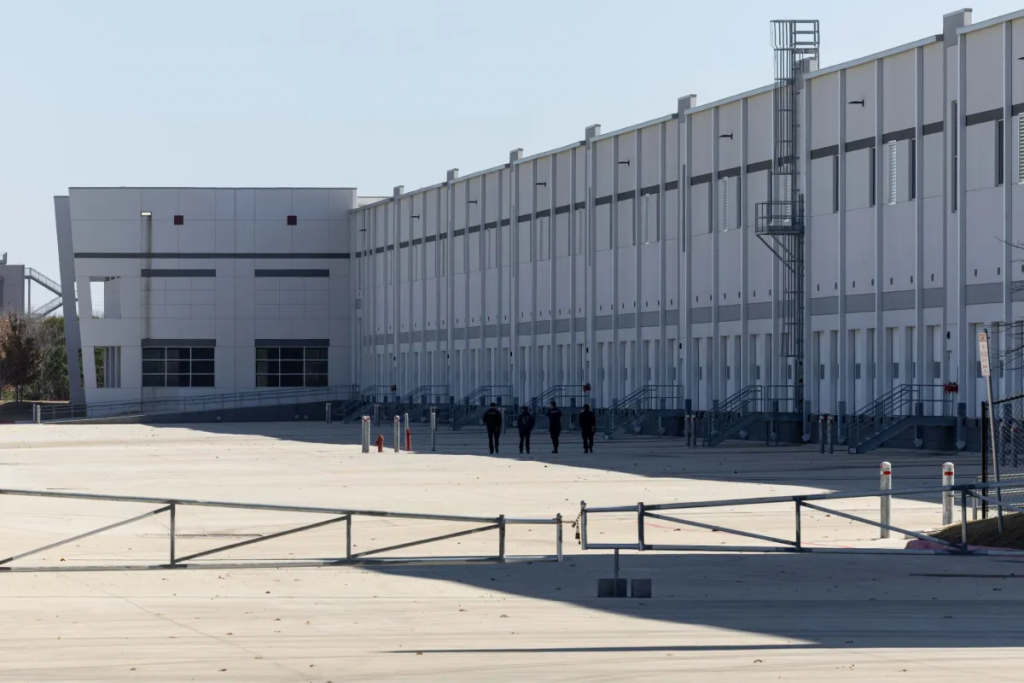
The City of San Antonio filed a federal lawsuit Tuesday against the Trump administration, seeking to block the conversion of a warehouse into a new Immigration and Customs Enforcement (ICE) detention facility capable of holding up to 1,500 illegal immigrants.
The Department of Homeland Security purchased the nearly 640,000-square-foot warehouse on San Antonio’s East Side for $66.1 million earlier this year. In August, federal officials awarded a $17.3 million contract to GardaWorld Federal Services to convert the property into an immigration detention and processing center.
The lawsuit, filed October 13, alleges that federal officials violated the National Environmental Policy Act by failing to conduct the required environmental review before advancing the project. City officials raised concerns about the facility’s potential impact on local water and sewer infrastructure, public health, and nearby communities.
Democratic San Antonio Mayor Gina Ortiz Jones has criticized the federal government’s handling of the project, arguing that officials have failed to provide sufficient information about the facility. The city is asking the court to halt the conversion until federal environmental requirements are satisfied.
However, not all city leaders support the lawsuit. Republican Councilmembers Marc Whyte and Misty Spears publicly opposed the legal challenge, arguing that immigration enforcement falls under federal jurisdiction and that the lawsuit would waste taxpayer dollars.
“This lawsuit is the wrong fight, and taxpayers will foot the bill,” Whyte said. “Washington sets immigration policy. We’ve got more than enough work to do right here at home.”
Spears similarly criticized the city’s priorities, questioning why officials had not expressed comparable environmental concerns when San Antonio operated its Migrant Resource Center.
The Department of Homeland Security has dismissed the lawsuit as politically motivated. The legal challenge comes as the Trump administration continues expanding detention capacity to support its immigration enforcement and deportation efforts. The court has not yet determined whether the project may proceed.