
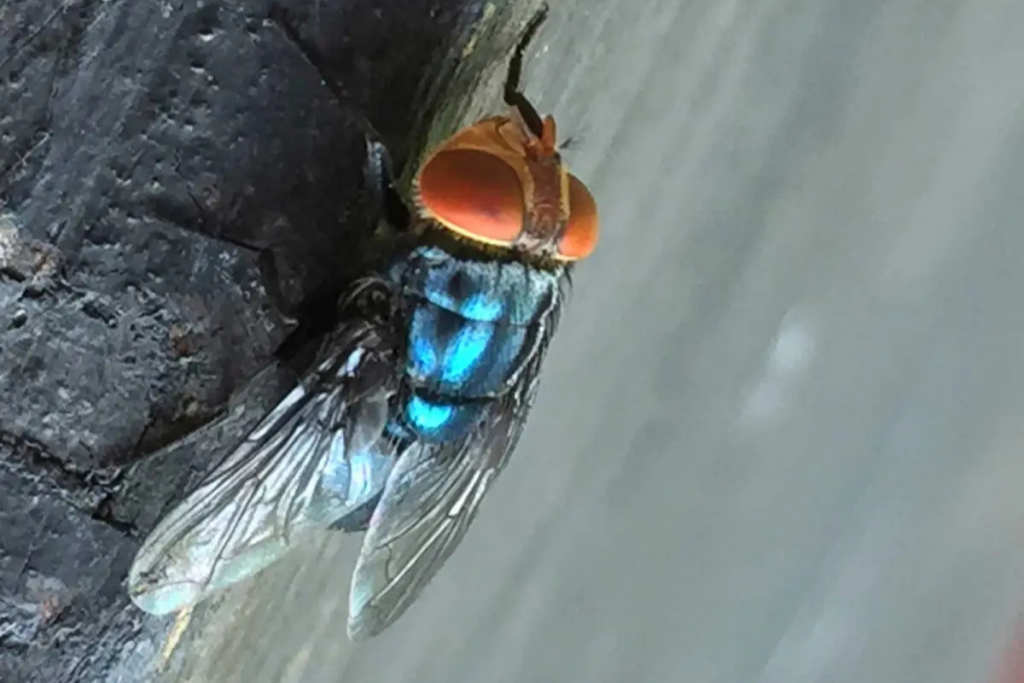
The United States Department of Agriculture (USDA) has confirmed an active case of the New World Screwworm (NWS) in Zavala County, Texas which was detected in the umbilical area of a three-week-old calf, marking the first domestic detection since the 2016–2017 outbreak in the Florida Keys was eradicated. The New World Screwworm (Cochliomyia hominivorax) is a highly destructive parasitic fly whose larvae feed exclusively on the living flesh of warm-blooded animals and, in rare cases, humans. The discovery has put the nation’s agricultural sector on high alert, threatening a $515 billion U.S. agricultural economy in which cattle production consistently represents the single largest share.
An unchecked outbreak could trigger catastrophic losses to both domestic and global food security. The United States accounts for approximately 18-20% of global beef production and roughly 75% of the entire North American cattle inventory. Compared to the European Union, another major global producer, the U.S. generates twice as much beef. An uncontrolled invasion of this flesh-eating parasite would be financially devastating. The USDA’s NWS Economic Impact Report previously warned in 2025 that a widespread infestation could cost U.S. livestock producers approximately $1 billion and drain $3.7 billion from the broader economy, hitting a market already strained by decades-low national herd numbers.
A half-century-long American battle
For nearly 70 years, the United States has spent billions of dollars funding, managing, and executing a massive biological campaign to push this parasite southward. America pioneered the revolutionary weapon in this fight: the Sterile Insect Technique (SIT), conceived by American entomologists Dr. Edward F. Knipling and Dr. Raymond C. Bushland beginning in the late 1930s and proven at scale through the 1950s. By releasing billions of sterilized flies that mate with wild flies and produce no offspring, the U.S. has successfully collapsed screwworm populations across half the entire continent.
The decades-long American effort unfolded in several incremental stages:
1950s–1960s: The U.S. successfully eradicated the fly from the American Southeast and Southwest, with self-sustaining populations eliminated from U.S. soil by 1966.
1970s–1990s: The U.S. led and funded a massive multi-decade joint program, covering upwards of 90% of costs, until Mexico was officially declared screwworm-free in 1991.
1990s–2000s: The eradication effort rolled south through Central America, clearing Guatemala, Belize, El Salvador, Honduras, Nicaragua, and Costa Rica, incrementally pushing the biological barrier further toward the equator.
2006: The parasite was finally contained at the ultimate geographic chokepoint: the narrow, roadless jungle of the Darién Gap in Panama. Panama was declared screwworm-free that year.
For nearly two decades after that, a robust biological wall was maintained in Panama. The USDA funded the majority of operations, using aircraft to release tens of millions of sterile flies weekly over the jungle chokepoint to prevent South American populations from migrating north.
The collapse of the biological wall
In 2022 and 2023, that barrier which had stood firmly for two decades, failed. Experts cite multiple compounding causes: COVID-era disruptions to sterile fly production facilities, a surge in illegal cattle trafficking across Central American borders due to poor local government enforcement, and significant numbers of illegal migrants moving through the Darién jungle, all disrupting the remote terrain where the biological barrier had to be maintained.
The crisis was dramatically worsened by a political catastrophe in Panama. The Cobre Panamá mine, operated by Canadian mining giant First Quantum Minerals, stood as the single largest private investment in Panama’s history: a $10 billion project that had become a cornerstone of the national economy. According to First Quantum Minerals, the 2023 contract rejection meant a loss of $375 million in annual guaranteed royalties and a total economic footprint of $1.8 billion annually. The mine supported between 33,000 and 40,000 direct and indirect jobs, accounted for roughly 5% of Panama’s GDP, contributed over $50 million per week to the Panamanian state, and represented approximately 75% of the country’s physical goods exports.
When the company moved to expand operations and secure its long-term contract, a wave of severe civil unrest and violent road blockades paralyzed the country. The physical blockades were spearheaded by SUNTRACS (the Single Union of Construction and Similar Workers) and FRENADESO (the National Front for the Defense of Economic and Social Rights), which are both openly Marxist–Leninist workers’ unions whose leaders framed the Canadian corporation as an instrument of capitalist imperialism exploiting Panamanian sovereignty. While a broader coalition of indigenous groups, environmentalists, and ordinary citizens joined the protests over concerns about government corruption and environmental protection, it was the radical union leadership that organized and sustained the blockades that strangled the country’s infrastructure. This national chaos prevented local staff from reaching the fly-breeding facilities and cut off crucial supply chains at the Darién. Under sustained pressure, Panama’s Supreme Court ruled the mining contract unconstitutional, and the operation was shuttered in November 2023, costing the Panamanian people an estimated $1.7 billion in forgone economic contributions since the closure, setting a scary precedent for foreign investment, and simultaneously destroying the biological barrier that had protected North America for nearly two decades.
With its major barrier destroyed, the parasite quickly exploited foreign cattle herds with little natural immunity, moving aggressively north through Central America and logging thousands of cases across Mexico before reaching South Texas.
Decades of American investment but years of foreign failure
The breach has re-ignited intense debate among agricultural stakeholders and lawmakers over international accountability. Critics point out that despite half a century of American innovation, manpower, and investment, the systemic failures of Latin American governments regarding smuggling, illegal migration through controlled zones, and political instability have effectively undone billions of dollars in U.S. humanitarian and conservation work.
Many industry voices are now calling for foreign partners to bear a genuine share of the financial burden, and for stricter trade enforcement and direct diplomatic consequences rather than a continuation of one-sided American subsidies.
If you suspect an infection in your herd, contact the Texas Animal Health Commission or check the USDA APHIS Screwworm Guidelines for reporting instructions.